China Top 10 Solar Storage Why Businesses Invest?

Time:2026-11-21 Author:Henry
0%

China’s solar-storage market offers businesses a wide range of systems, from compact battery cabinets to larger, integrated installations. A useful China Top 10 comparison should look beyond headline capacity. Battery chemistry, inverter compatibility, safety controls, warranty terms, and local service all matter. So does the supplier’s ability to explain performance assumptions clearly.

Why are businesses investing in solar energy storage? For many, storage can help use more rooftop solar after sunset, manage periods of high demand, or provide backup during certain power interruptions. The value depends on a site’s load profile, electricity tariff, operating hours, and local grid conditions. A warehouse with daytime cooling needs may benefit differently from a factory running night shifts. It is not magic. Still, a well-sized system can make energy use more predictable.

Price alone rarely tells the whole story. Businesses should compare usable capacity, expected cycle life, installation requirements, monitoring tools, and support arrangements. They should also ask how projected savings were calculated, then check those assumptions against real bills and operating data. A polished spreadsheet can flatter a project. That deserves a second look. China’s leading suppliers may offer competitive technology and manufacturing scale, but products are not interchangeable, and claims need verification. The strongest choice is not automatically the biggest battery or the lowest quote. It is the system that fits the site, meets applicable safety requirements, and has dependable service behind it.
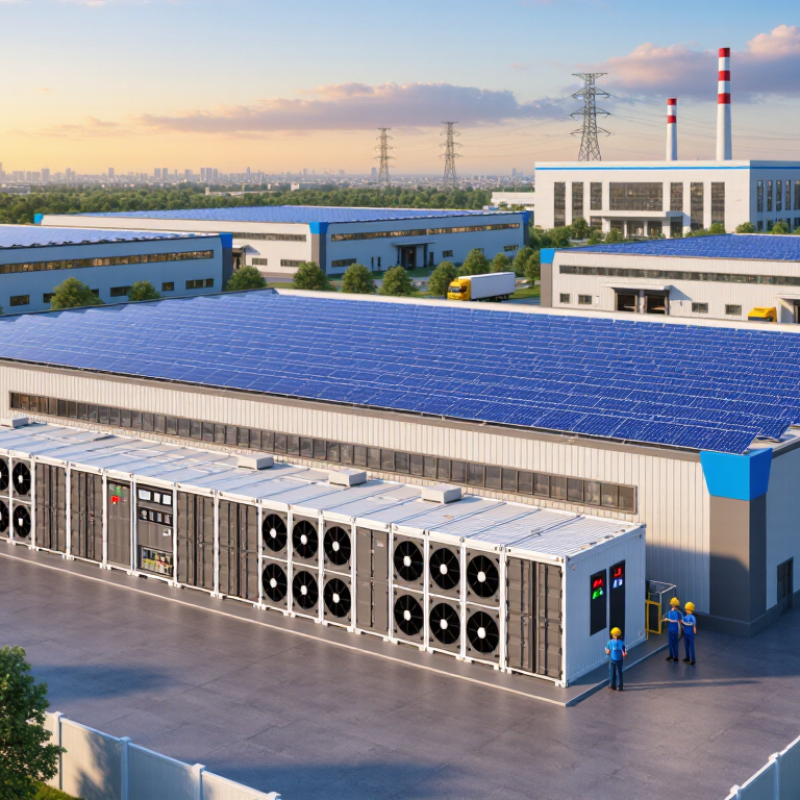
China Top 10 Solar Storage Why Businesses Invest?

China’s Solar-Storage Market: 216.9 GW of PV Added in 2023 (NEA)

China added 216.9 GW of solar PV capacity in 2023, according to the National Energy Administration’s 2023 power-industry statistics. That was a remarkable expansion. It also means more daytime generation must be matched with demand, grid capacity, or storage. For businesses, a battery can shift some solar power from bright midday hours to evening operations. Picture a warehouse charging forklifts after sunset, rather than drawing all power from the grid. Still, national growth does not prove that every site will save money.

Storage deployment is rising too. The China Energy Storage Alliance’s 2024 research white paper estimates that China added 21.5 GW of new-type energy storage, with 46.6 GWh of energy capacity, in 2023. These figures show momentum, not guaranteed returns. Actual value depends on local tariffs, load patterns, connection limits, and battery costs. I would not treat a fast-growing market as a shortcut around careful site analysis. The numbers can hide uneven economics.

Tips: Compare hourly electricity use with solar output before sizing a system. Check export limits and demand charges. Ask for a conservative payback estimate using your own bills. Small details matter.

How Business Solar-Storage Systems Combine PV, Batteries, and Grid Control

China Top 10 Solar Storage Why Businesses Invest?

A business solar-storage system is more than panels beside a battery. Photovoltaic modules supply daytime loads, while an inverter directs surplus power into storage. A site energy-management controller then balances battery charging, building demand, and grid imports. At 4 p.m., for example, a battery can discharge as equipment starts and solar output fades. That can reduce peak demand, depending on the site’s tariff and operating schedule. The controls matter. Forecasts help, but cloudy weather and sudden production changes can still upset a plan.

The International Energy Agency’s 2024 report, Batteries and Secure Energy Transitions, says power-sector battery capacity must reach 1,200 GW by 2030 in its net-zero pathway. That is a system-wide scenario, not a forecast for any single business.

BloombergNEF reported average lithium-ion battery-pack prices of $115 per kilowatt-hour in 2024, down 20% from 2023. Installed commercial systems cost more; integration, electrical work, and financing all count.

Businesses should examine interval load data before sizing storage. A battery that looks impressive on paper may sit underused. The uncomfortable part? Controls cannot fix a poor project design.

Ten Leading Solar-Storage Solutions for Chinese Businesses

China’s commercial solar-storage market is not one-size-fits-all. Ten practical configurations include factory-roof solar with batteries, warehouse-roof systems, solar carports, ground-mounted arrays, behind-the-meter storage, solar-plus-charging sites, campus microgrids, peak-shaving systems, backup-power systems, and coordinated energy-management platforms. The National Energy Administration reported that China added 277.17 gigawatts of solar capacity in 2024. That growth gives businesses more options, but a large roof alone does not guarantee a sound investment.

Site audits should examine hourly electricity use, roof structure, connection capacity, and local tariffs. A cold-storage facility, for example, may value dependable backup more than midday exports. The NEA reported 73.76 gigawatts of new-type energy storage operating in China by the end of 2024, with an average duration of about 2.3 hours. Globally, the IEA’s Batteries and Secure Energy Transitions report says battery capacity would need to reach 1,200 gigawatts by 2030 in its net-zero scenario. That is a scenario, not a promise of returns.

The awkward part: projections can look cleaner than real operations. Battery degradation, seasonal shade, and changing production shifts can weaken payback estimates. Businesses should compare several operating cases and verify assumptions against meter data. Start small, where uncertainty is high. A pilot can expose faults that a spreadsheet misses.

China Top 10 Solar Storage Why Businesses Invest? - Ten Leading Solar-Storage Solutions for Chinese Businesses

These are common solution types, not a ranked list of vendors. System sizes below are indicative examples; actual design depends on site load, roof or land availability, local grid rules, tariffs, and project economics.

Solution Typical Business Setting Illustrative PV / Battery Scale How Storage Is Used Why Businesses Invest Key Design Consideration
Factory rooftop solar with battery Manufacturing plants with substantial daytime electricity use PV: hundreds of kW to several MW; battery: site-specific, often sized in hundreds of kWh or more Stores surplus solar or shifts energy to selected later hours Can increase on-site solar use and reduce exposure to some grid purchases Roof loading, production schedules, fire safety, and export rules
Commercial and industrial peak-management system Sites with high peak demand or time-varying electricity prices PV: optional; battery: commonly designed from the site's demand profile rather than a fixed size Discharges during selected high-cost or high-demand periods May reduce peak-related electricity costs where the local tariff structure rewards it Tariffs and demand-charge rules differ by region and customer category
Solar-plus-storage for a logistics warehouse Warehouses with large roofs, lighting, refrigeration, or electric vehicle charging PV: hundreds of kW to MW scale; battery: matched to charging and operating loads Supports load shifting and can coordinate with charging schedules Makes use of roof area and helps manage coincident building and vehicle loads Charging demand, connection capacity, and roof condition
Cold-storage and food-processing system Refrigerated warehouses, food plants, and temperature-controlled facilities PV: sized to available site area; battery: sized around refrigeration loads and backup objectives Shifts energy use and may support selected critical loads during outages if configured to do so Can help manage continuous energy demand and improve resilience for critical equipment Backup duration, compressor starting loads, and temperature-control requirements
Industrial park shared solar and storage Multi-tenant industrial parks or business campuses PV and battery capacity determined by aggregated loads, available roofs, and connection limits Coordinates generation and storage across eligible shared infrastructure Can pool suitable roof areas and energy-management resources across tenants Metering, ownership, settlement, and applicable local regulations
Solar carport with battery and EV charging Factories, offices, retail sites, and fleet depots with parking areas PV: based on carport area; battery: matched to charger power and charging patterns Stores solar energy for later charging or helps manage brief charging peaks Combines parking shade, on-site generation, and managed vehicle charging Charger utilization, grid connection capacity, and construction cost
Commercial building rooftop solar and storage Offices, hotels, shopping centers, and mixed-use commercial buildings PV: tens of kW to MW scale; battery: selected according to building load and operating goals Shifts solar energy toward evening use or supports designated essential circuits Can offset part of daytime consumption and support energy-management objectives Tenant arrangements, usable roof space, and essential-load definition
Rural or remote business microgrid Remote facilities, agricultural operations, and sites with weak grid connections PV and battery sized to measured load; other generation may be included where required Balances local generation and demand and can provide specified backup capability May improve supply reliability where grid service is limited or interruptions are costly Seasonal load, backup duration, controls, and maintenance access
Solar storage for water pumping and agricultural processing Agricultural businesses, irrigation sites, and produce-processing facilities PV and battery selected according to pump power, operating hours, and water-storage options Stores electricity or shifts pumping to periods of solar availability Can align energy use with irrigation and processing schedules Water storage may be a lower-cost flexibility option than electrical storage
Solar-plus-storage with demand response Flexible industrial and commercial loads that can adjust operating times PV and battery sized together with controllable loads and participation requirements Combines battery dispatch with load shifting when operationally feasible May improve flexibility and create value where demand-response programs are available Program eligibility, response times, operating limits, and compensation terms

Note: Storage does not automatically guarantee lower bills or uninterrupted power. Verify local tariffs, interconnection requirements, safety standards, equipment warranties, degradation assumptions, and project costs before investment.

Why Businesses Invest: China Added 46.6 GWh of New Energy Storage in 2023 (CNESA)

Why Businesses Invest: China Added 46.6 GWh of New Energy Storage in 2023

China’s storage market expanded quickly in 2023. CNESA’s 2024 China Energy Storage Industry Research White Paper reports 46.6 GWh of newly added energy storage capacity, equal to 21.5 GW of power capacity. That is a substantial build-out.

For businesses, storage can capture surplus solar power during midday and supply it after sunset, when production lines and offices still need electricity. It can also help manage short demand peaks, though savings depend on local tariffs and operating patterns.

The National Energy Administration reported 31.39 GW of new-type energy storage installed by the end of 2023, with an average duration of about 2.1 hours. Those figures show momentum, not guaranteed returns. A factory with predictable daytime demand may benefit differently from a warehouse that runs overnight.

Battery degradation, connection delays, and changing electricity prices can weaken a project’s business case. The numbers are impressive. But they do not replace careful site-level analysis. Companies should compare hourly load data with solar output, storage costs, and actual tariff rules before investing.

How to Assess Projects Against China’s 2.2-Hour Average Storage Duration (CNESA)

China’s 2.2-hour average storage duration, cited by CNESA, is a reference point—not a project target. Assess duration as usable energy divided by discharge power at the grid connection. A 100 MW project with 220 MWh usable capacity delivers 2.2 hours at full output. Nameplate figures can mislead. Account for conversion losses, operating reserves, and degradation before comparing bids.

The IEA’s Batteries and Secure Energy Transitions (2024) reports that global battery storage additions reached 42 GW in 2023, more than 130% above 2022. Growth alone does not prove a site’s economics. Model the actual dispatch window: a solar plant may need evening output, while a grid service may value shorter, frequent cycles. Check round-trip efficiency, annual cycle limits, availability, and replacement assumptions against the same operating profile. Small details matter. Ask for hourly simulations, not just a headline duration. I would also test low-sun months separately; a clean annual average can hide a weak winter case. And forecasts remain forecasts. Compare expected revenue with conservative prices and realistic degradation, then verify that the contract rewards usable energy rather than installed capacity alone.

FAQS

How much solar capacity did China add in 2023?

China added 216.9 gigawatts of solar photovoltaic capacity in 2023. That is a national figure, not a promise of savings for one site.

What can a business battery do with extra solar power?

It can store midday surplus and supply evening loads, such as warehouse forklifts charging after sunset. Timing matters.

What determines whether storage pays off?

Local tariffs, hourly loads, export limits, demand charges, battery costs, and connection capacity all matter. The numbers can disappoint.

How should a business size its system?

Compare interval meter data with solar output, then check roof structure and grid limits. A large roof is not enough.

What does an energy-management controller do?

It coordinates solar generation, battery charging, building demand, and grid imports. Forecasts help, but clouds and sudden production changes still interfere.

What kinds of solar-storage setups do businesses use?

Options include factory or warehouse roofs, solar carports, ground arrays, peak-shaving systems, backup power, and campus microgrids. No single layout fits every site.

How long can a battery support operations?

It depends on battery capacity, site load, and operating settings. New-type storage in China averaged about 2.3 hours in 2024. Not site-specific.

How can businesses reduce project risk?

Compare conservative payback cases and include battery wear, seasonal shade, and changing shifts. A small pilot may reveal faults. Spreadsheets miss things.

Conclusion

China’s solar-storage market is expanding rapidly, with 216.9 GW of photovoltaic capacity added in 2023, according to the National Energy Administration. For businesses, solar-storage systems bring together on-site solar generation, battery storage, and grid-control functions. This combination can help organizations use more of their own solar power, manage when electricity is drawn from or supplied to the grid, and better match energy use with operating needs.

So why are businesses investing in solar energy storage? China added 46.6 GWh of new energy storage in 2023, reflecting growing interest in flexible power solutions. This overview examines ten types of solar-storage solutions available to Chinese businesses and outlines how to compare projects with the country’s reported average storage duration of 2.2 hours. Assessing demand patterns, system capacity, operating schedules, and expected storage duration can help businesses determine whether a project suits their energy requirements.

Henry

Henry

Henry is a dedicated marketing professional with a profound expertise in the company's offerings. With years of experience in the industry, he possesses an impressive understanding of the market dynamics and consumer behaviors that drive success. Henry is committed to sharing his insights through......